
The way people search online is changing rapidly. Traditional search engines like Google still dominate, but AI-powered search platforms such as ChatGPT, Google AI Overviews, Gemini, Claude, and Perplexity are transforming how users discover information. Instead of browsing multiple websites, users now expect direct, accurate, and conversational answers.
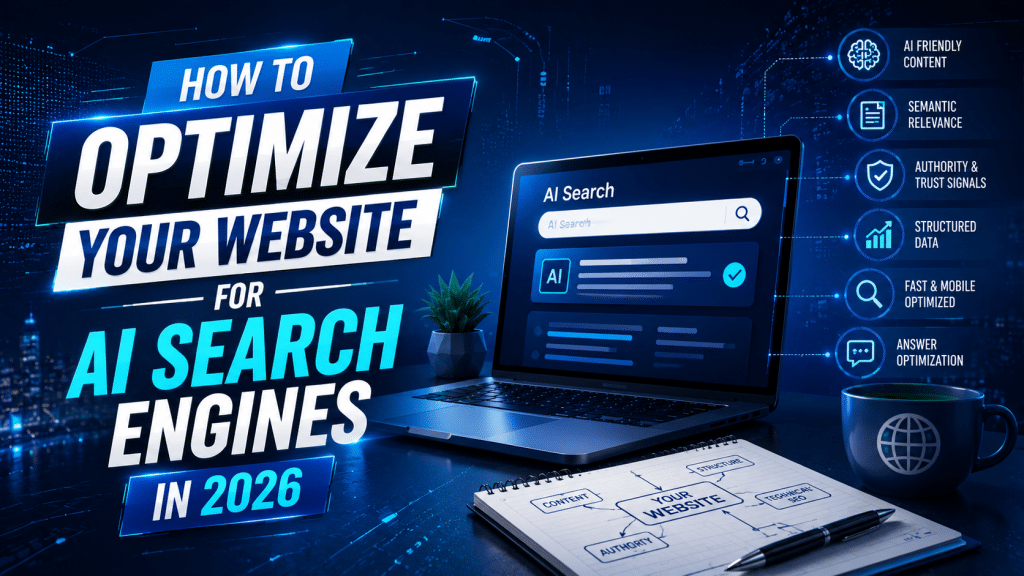
This shift means businesses must optimize their websites not only for traditional Search Engine Optimization (SEO) but also for Answer Engine Optimization (AEO). Understanding how to Optimize Your Website for AI Search Engines in 2026 is essential for improving online visibility, attracting qualified traffic, and staying ahead of competitors.
At WDC Lahore, we help businesses create AI-ready websites that perform well in both search engines and AI-powered search experiences. By combining technical SEO, structured data, high-quality content, and user-focused strategies, businesses can future-proof their digital presence.
What Are AI Search Engines?
AI search engines use artificial intelligence and large language models (LLMs) to understand user intent and provide direct answers rather than simply displaying a list of links.
Examples include:
- Google AI Overviews
- ChatGPT Search
- Google Gemini
- Perplexity AI
- Microsoft Copilot
- Claude AI
These platforms analyze website content, authority, structure, and trustworthiness before presenting information to users.
Why AI Search Optimization Matters
AI search is becoming a major source of website discovery. Businesses that adapt early gain several advantages, including:
- Increased online visibility
- Higher-quality traffic
- Improved brand authority
- Better user engagement
- Greater opportunities to appear in AI-generated answers
Traditional SEO remains important, but optimizing for AI search adds another layer of visibility that many businesses are still overlooking.
Create Helpful, People-First Content
AI search engines prioritize content that genuinely answers user questions.
Instead of writing solely around keywords, focus on solving real problems.
Good content should:
- Answer questions clearly
- Include practical examples
- Be easy to read
- Stay accurate and up to date
- Demonstrate expertise
Content that provides genuine value is more likely to be referenced by AI systems.
Focus on Search Intent
Understanding user intent is more important than ever.
Content should address different types of searches, such as:
Informational Intent
Example:
“What is AI Search?”
Commercial Intent
Example:
“Best AI SEO agency in Lahore”
Transactional Intent
Example:
“Hire SEO experts”
Creating pages that match each intent improves visibility across both traditional and AI search.
Use Clear Content Structure
AI systems process well-structured content more effectively.
Use:
- H1 for the main topic
- H2 and H3 headings
- Bullet points
- Numbered lists
- Short paragraphs
- Summary sections
A logical structure helps both users and AI understand your content.
Implement Structured Data
Schema markup helps AI search engines understand your website.
Useful schema types include:
- Organization
- Article
- FAQ
- Breadcrumb
- Local Business
- Product
- Service
- Review
Structured data increases the likelihood of appearing in rich results and AI-generated responses.
Improve Website Speed
Fast websites provide better user experiences and are favored by search engines.
Improve performance by:
- Compressing images
- Using browser caching
- Minimizing CSS and JavaScript
- Choosing reliable hosting
- Implementing a CDN
- Optimizing Core Web Vitals
Website speed directly impacts rankings and user satisfaction.
Optimize for Mobile Devices
Most users now browse using smartphones.
Ensure your website:
- Uses responsive design
- Loads quickly
- Has readable fonts
- Features easy navigation
- Includes clickable buttons with proper spacing
Mobile optimization is essential for both SEO and AI search visibility.
Build Topical Authority
Rather than publishing isolated articles, create content clusters around core topics.
For example:
Main Topic
AI Search Optimization
Supporting articles:
- What Is AEO?
- AI SEO vs Traditional SEO
- Schema Markup Guide
- Technical SEO Checklist
- Content Optimization Tips
- Local SEO for AI Search
This strategy helps search engines recognize your expertise.
Write Natural Language Content
AI models prefer conversational writing.
Instead of keyword stuffing, write naturally.
For example:
Rather than repeating:
“SEO Services Lahore”
Write:
“Our SEO services help businesses in Lahore improve rankings, increase organic traffic, and generate qualified leads.”
Natural writing improves readability and AI comprehension.
Publish Original Content
Unique insights perform better than generic information.
Include:
- Industry experience
- Original research
- Case studies
- Expert opinions
- Practical recommendations
This strengthens credibility and encourages AI systems to reference your content.
Strengthen E-E-A-T Signals
Google emphasizes Experience, Expertise, Authoritativeness, and Trustworthiness (E-E-A-T).
Improve these signals by:
- Publishing author bios
- Showing company information
- Displaying testimonials
- Listing certifications
- Updating content regularly
- Citing reliable sources where appropriate
These trust factors influence both traditional search and AI-generated results.
Optimize Local SEO
Local businesses should optimize for geographic searches.
Include:
- Google Business Profile optimization
- Consistent NAP information
- Local keywords
- Customer reviews
- Location-specific service pages
This increases visibility for local AI searches.
Improve Internal Linking
Internal links help AI understand your website structure.
Connect related articles using descriptive anchor text.
For example:
- AI SEO Guide
- Technical SEO
- Local SEO
- Web Development Services
A strong internal linking strategy improves crawlability and user navigation.
Create FAQ Sections
Frequently Asked Questions are highly valuable for AI search.
FAQs directly answer user queries in a concise format, making them more likely to appear in AI-generated responses.
Use clear, conversational questions followed by straightforward answers.
Keep Content Updated
AI search engines prefer fresh and relevant information.
Review your content regularly to:
- Update statistics
- Add new examples
- Improve outdated advice
- Remove broken links
- Refresh screenshots and visuals
Consistently updated content demonstrates ongoing expertise and reliability.
Monitor Performance
Track how your content performs by monitoring:
- Organic traffic
- Keyword rankings
- User engagement
- Bounce rate
- Conversion rate
- Search Console insights
These metrics help identify opportunities for continuous improvement.
The Future of AI Search
AI search will continue evolving throughout 2026 and beyond. Businesses that invest in high-quality content, technical optimization, and user experience today will be better positioned for long-term success.
According to Zain Naeem, businesses should treat AI search optimization as an extension of traditional SEO rather than a replacement. Combining both approaches creates stronger online visibility and sustainable growth.
At WDC Lahore, we help businesses build SEO-optimized, AI-ready websites that are designed to perform well in search engines while also increasing visibility across AI-powered search platforms.
Conclusion
Learning How to Optimize Your Website for AI Search Engines in 2026 is no longer optional for businesses that want to remain competitive. By focusing on helpful content, structured data, website performance, topical authority, and Answer Engine Optimization (AEO), you can improve your chances of appearing in both traditional search results and AI-generated answers.
As AI continues to reshape how people find information online, investing in AI search optimization today will help your website attract more visitors, build trust, and generate long-term business growth.
Frequently Asked Questions
1. What is AI Search Optimization?
AI Search Optimization is the process of improving your website so AI-powered search platforms like ChatGPT, Google AI Overviews, Gemini, and Perplexity can better understand and recommend your content.
2. Is SEO still important in 2026?
Yes. Traditional SEO remains essential, but combining it with Answer Engine Optimization (AEO) helps your website perform better across both search engines and AI-powered search platforms.
3. What is the difference between SEO and AEO?
SEO focuses on improving rankings in search engine results pages, while AEO aims to provide clear, authoritative answers that AI systems can use directly in generated responses.
4. How can schema markup help AI search engines?
Schema markup provides structured information about your content, making it easier for AI systems and search engines to understand your pages and potentially feature them in enhanced search results.
5. Why should businesses invest in AI search optimization?
AI search optimization helps businesses increase online visibility, reach users across emerging AI platforms, improve brand authority, and stay competitive as search behavior continues to evolve.