
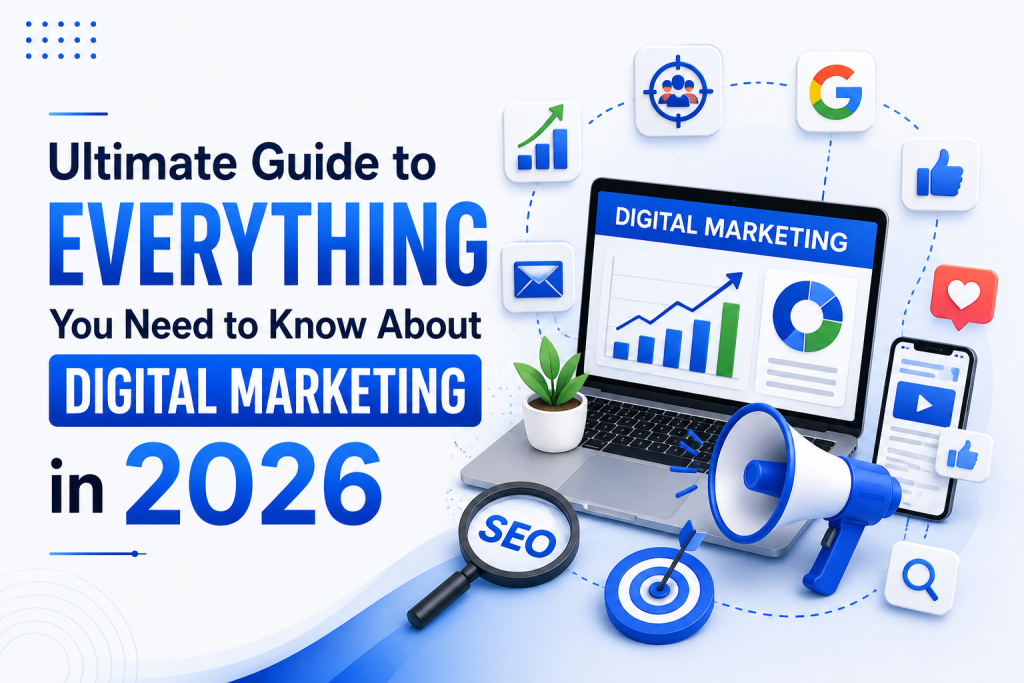
Digital marketing in 2026 is more advanced, data-driven, and competitive than ever before. Businesses of all sizes are investing heavily in digital channels to reach customers, build brand awareness, and increase sales. As artificial intelligence, automation, personalization, and consumer expectations continue to evolve, companies must adapt their marketing strategies to remain competitive.
Whether you are a startup, small business owner, entrepreneur, or marketing professional, understanding the latest trends and best practices can help you achieve sustainable growth. This comprehensive guide covers everything you need to know about Digital Marketing in 2026, including the latest technologies, strategies, and opportunities shaping the future of online marketing.
What Is Digital Marketing?
Digital marketing refers to the promotion of products, services, or brands through online channels such as search engines, websites, social media platforms, email, mobile applications, and digital advertising networks.
Unlike traditional marketing methods, digital marketing allows businesses to target specific audiences, track performance in real time, and optimize campaigns based on measurable data.
In 2026, digital marketing has become an essential component of business growth because consumers spend a significant portion of their time online researching products, reading reviews, watching videos, and engaging with brands.
Why Digital Marketing Matters in 2026
The online marketplace continues to grow rapidly. Consumers expect personalized experiences, instant responses, and seamless interactions across multiple devices.
Key reasons digital marketing remains important include:
- Increased online consumer activity
- Better audience targeting capabilities
- Higher return on investment (ROI)
- Real-time analytics and reporting
- Cost-effective marketing solutions
- Improved customer engagement
- Enhanced brand visibility
Businesses that fail to invest in digital marketing risk losing market share to competitors who actively engage their audiences online.
The Role of Artificial Intelligence in Digital Marketing
Artificial intelligence has transformed digital marketing by automating tasks, improving personalization, and enhancing customer experiences.
AI-powered tools help marketers:
- Generate content ideas
- Create personalized email campaigns
- Analyze customer behavior
- Optimize ad performance
- Improve customer support through chatbots
- Predict future market trends
In 2026, AI is no longer a luxury but a necessity for businesses looking to scale their marketing efforts efficiently.
Search Engine Optimization (SEO)
SEO remains one of the most powerful digital marketing strategies available. Search engines continue to be a primary source of website traffic for businesses worldwide.
Modern SEO focuses on:
User Experience
Google prioritizes websites that offer fast loading speeds, mobile responsiveness, easy navigation, and valuable content.
Search Intent
Successful SEO strategies focus on understanding what users are looking for and creating content that satisfies those needs.
High-Quality Content
Content remains a major ranking factor. Businesses must produce informative, engaging, and authoritative content that answers user questions.
Voice Search Optimization
As voice assistants become more popular, optimizing content for conversational search queries has become increasingly important.
Technical SEO
Technical elements such as website structure, schema markup, security, and page performance continue to influence search rankings.
Content Marketing in 2026
Content marketing remains the foundation of successful digital marketing campaigns.
Businesses are creating:
- Blog posts
- Videos
- Podcasts
- Infographics
- Case studies
- Whitepapers
- Interactive content
The goal is to educate, inform, and engage audiences while building trust and authority.
High-quality content helps businesses attract organic traffic, generate leads, and establish credibility within their industry.
Social Media Marketing
Social media platforms continue to evolve and play a crucial role in customer engagement.
Popular platforms include:
- TikTok
- X
- YouTube
Successful social media marketing strategies focus on authentic engagement rather than simply publishing promotional content.
Brands that build communities and encourage conversations tend to achieve stronger customer loyalty and higher conversion rates.
Video Marketing
Video content has become one of the most effective forms of digital communication.
Businesses use video marketing for:
- Product demonstrations
- Tutorials
- Customer testimonials
- Brand storytelling
- Live streaming
- Educational content
Short-form videos continue to dominate social media platforms, while long-form educational videos remain valuable for building authority and trust.
Email Marketing Still Works
Despite the rise of new marketing channels, email marketing remains highly effective.
Benefits include:
- Direct customer communication
- Personalized messaging
- High ROI
- Customer retention
- Lead nurturing
Modern email campaigns leverage AI-driven personalization to deliver relevant content based on user preferences and behaviors.
Pay-Per-Click Advertising (PPC)
PPC advertising allows businesses to generate immediate visibility through paid search and display ads.
Popular advertising platforms include:
- Google Ads
- Meta Ads
- LinkedIn Ads
- TikTok Ads
- YouTube Ads
Advanced targeting capabilities enable businesses to reach highly specific audiences based on demographics, interests, online behavior, and purchase intent.
Influencer Marketing
Influencer marketing continues to expand as consumers trust recommendations from creators they follow.
Brands collaborate with:
- Industry experts
- Social media influencers
- Content creators
- Thought leaders
Micro-influencers are becoming particularly valuable due to their highly engaged audiences and authentic relationships with followers.
Data Analytics and Marketing Performance
Modern digital marketing relies heavily on data analysis.
Businesses track metrics such as:
- Website traffic
- Conversion rates
- Customer acquisition cost
- Click-through rates
- Engagement rates
- Return on ad spend
Data-driven decision-making allows marketers to optimize campaigns and maximize results.
Personalization Is Essential
Consumers now expect personalized experiences throughout their buying journey.
Businesses are using customer data to provide:
- Personalized recommendations
- Customized emails
- Dynamic website content
- Targeted advertisements
Personalization improves engagement, increases conversions, and strengthens customer relationships.
Mobile-First Marketing
Mobile devices account for a significant portion of online activity.
Businesses must ensure:
- Mobile-friendly websites
- Fast loading speeds
- Responsive designs
- Mobile-optimized content
- Simplified checkout experiences
A mobile-first approach improves user satisfaction and search engine rankings.
Building Brand Authority Online
Brand authority has become increasingly important in competitive markets.
Businesses can establish authority through:
- Consistent content creation
- Industry expertise
- Customer success stories
- Thought leadership
- Educational resources
Companies like WDC Lahore understand the importance of combining SEO, content marketing, web development, and strategic digital campaigns to help businesses strengthen their online presence and generate long-term growth.
The Future of Digital Marketing
The future of Digital Marketing in 2026 revolves around automation, artificial intelligence, personalization, and customer-centric experiences.
Businesses that embrace innovation while maintaining authentic human connections will be best positioned for success.
Emerging technologies such as augmented reality, predictive analytics, conversational AI, and advanced automation tools will continue to reshape the marketing landscape in the coming years.
According to industry leaders such as Zain Naeem, businesses that continuously adapt to changing consumer behavior and technological advancements are more likely to achieve sustainable digital growth.
Organizations like WDC Lahore continue to help businesses navigate these changes by implementing modern marketing strategies designed for the evolving digital environment.
Conclusion
Digital marketing in 2026 is more sophisticated and opportunity-rich than ever before. From SEO and content marketing to AI-driven automation and personalized customer experiences, businesses have access to powerful tools that can drive growth and improve customer engagement.
Success in today’s digital landscape requires a strategic approach that combines technology, creativity, data analysis, and customer understanding. By staying informed about emerging trends and implementing proven marketing strategies, businesses can build strong online brands, attract qualified leads, and achieve long-term success.
Frequently Asked Questions (FAQs)
What is digital marketing in 2026?
Digital marketing in 2026 involves promoting products and services through online channels using advanced technologies such as AI, automation, personalized content, SEO, social media marketing, and data analytics.
Why is SEO important for digital marketing?
SEO helps websites rank higher in search engine results, increase organic traffic, improve visibility, and attract potential customers actively searching for relevant products or services.
How does AI impact digital marketing?
AI improves marketing efficiency by automating tasks, personalizing customer experiences, analyzing data, optimizing campaigns, and predicting customer behavior.
Which digital marketing strategy offers the best ROI?
The best ROI often comes from a combination of SEO, content marketing, email marketing, and targeted paid advertising tailored to specific business goals.
Is social media marketing still effective in 2026?
Yes. Social media remains a powerful channel for brand awareness, customer engagement, lead generation, and community building when used strategically.
What role does content marketing play in digital marketing?
Content marketing helps businesses educate audiences, build trust, improve SEO performance, generate leads, and establish industry authority.
Why is personalization important in digital marketing?
Personalization improves user experience by delivering relevant content and recommendations, leading to higher engagement, customer satisfaction, and conversion rates.
How can small businesses benefit from digital marketing?
Small businesses can use digital marketing to reach targeted audiences, compete with larger companies, increase brand awareness, generate leads, and grow revenue cost-effectively.